Precision Mapping: The Transformative Power of 3D Laser Scanning in Connecticut
Connecticut 3D laser scanning for hiking trails .In an age where technological advancements reshape industries at an unprecedented price, one field experiencing extensive makeover is mapping and evaluating. Among the most innovative advancements is 3D laser scanning, an innovation that's reinventing precision mapping in Connecticut. This state, with its diverse topography and dense city areas, offers one-of-a-kind challenges and possibilities for mapping and evaluating. 3D laser scanning is attending to these challenges, providing unparalleled precision and effectiveness.
Understanding 3D Laser Scanning
3D laser scanning, additionally known as LiDAR (Light Detection and Ranging), is a remote sensing approach that makes use of light in the form of a pulsed laser to gauge variable distances to the Earth. These light pulses, combined with various other data tape-recorded by the airborne system, create specific, three-dimensional info concerning the form and surface area attributes of the landscape. The result is an extremely thorough and precise digital representation of the scanned environment.
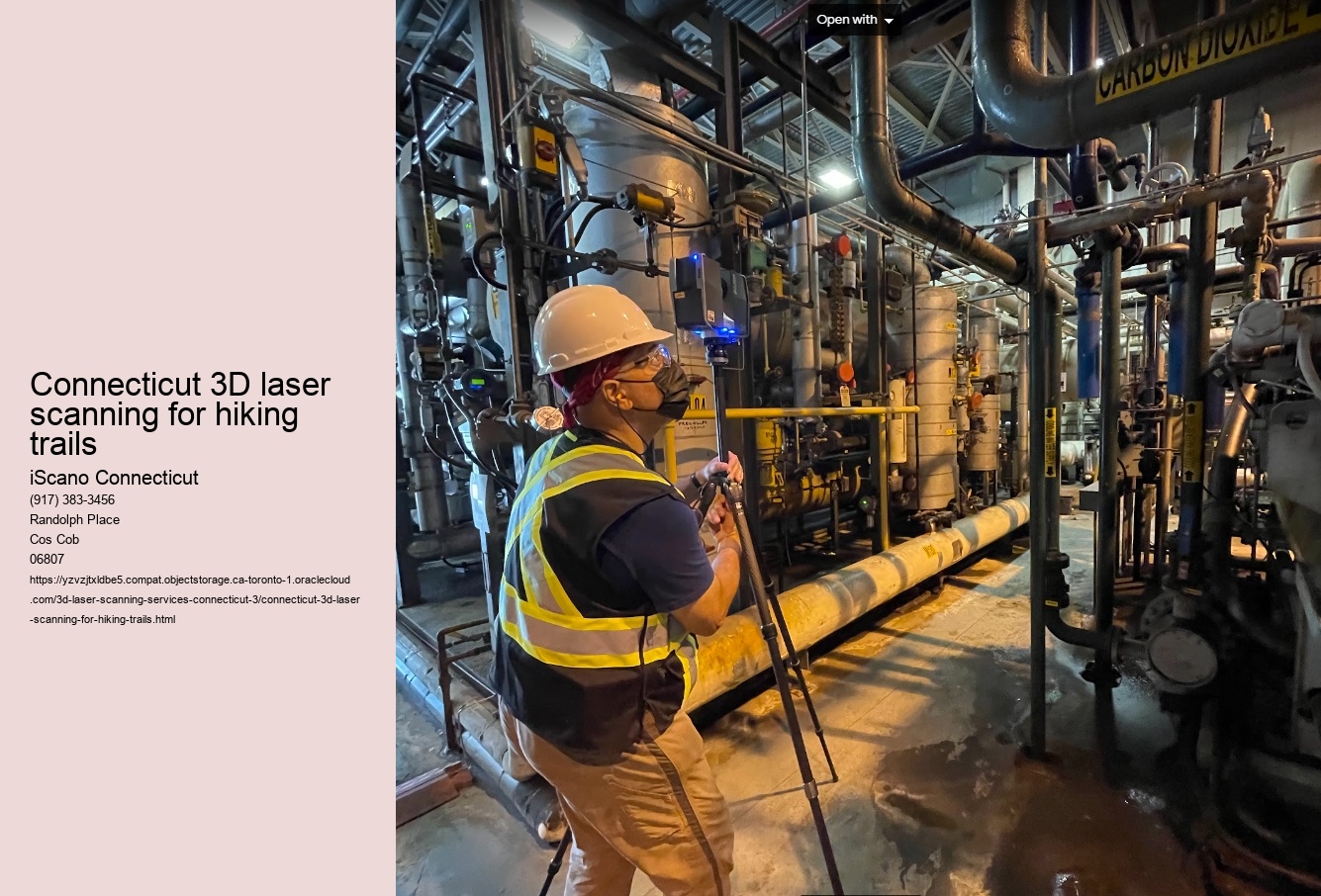
The innovation works by emitting laser beams in the direction of a target surface. When these beam of lights hit the surface, they are mirrored back to the scanner, which determines the time it takes for the light to return. This time-of-flight data is then used to compute the distance between the scanner and the target. By rapidly duplicating this process millions of times per second, the scanner constructs a comprehensive 3D point cloud—-- a thick collection of points standing for the checked location.
Applications in Connecticut
Urban Preparation and Advancement
Connecticut’s metropolitan facilities, such as Hartford, New Sanctuary, and Bridgeport, advantage substantially from 3D laser scanning. Urban coordinators and programmers utilize this technology to develop comprehensive designs of existing structures and landscapes. These designs promote more precise preparation and style, permitting far better assimilation of new developments with existing metropolitan fabric.
For example, 3D laser scanning can capture the intricate details of historic buildings, guaranteeing that brand-new developments respect the architectural heritage of the location. Additionally, it aids in the planning of facilities jobs like roads, bridges, and mass transit systems by offering specific topographical information. This level of information assists coordinators prepare for possible problems and layout options that decrease disturbances during building.
Environmental Preservation
Connecticut is known for its abundant all-natural landscapes, consisting of woodlands, rivers, and seaside areas. 3D laser scanning plays an important duty in environmental conservation initiatives by offering in-depth and accurate data on these natural functions. Conservationists utilize this information to check adjustments in the environment, such as disintegration, logging, and habitat loss.
For example, coastal disintegration is a considerable concern in Connecticut. By using 3D laser scanning, researchers can produce topographic maps of the coast and screen changes over time. This information assists in creating techniques to reduce erosion and safeguard beneficial seaside communities. Similarly, in forestry administration, LiDAR technology enables the mapping of tree cover structures, assisting in the assessment of forest health and wellness and biodiversity.
Historic Preservation
Connecticut is home to lots of historical sites and spots. Protecting these prizes for future generations is a priority, and 3D laser scanning is a very useful device in this effort. The modern technology permits the creation of exact digital models of historic structures, catching every information with high accuracy.
These digital models offer numerous purposes. They can be used for documentation and archival, ensuring that precise documents of the structures exist also if the physical buildings are harmed or weaken with time. Additionally, the designs can be used in repair tasks, giving architects and building contractors with thorough plans that help in maintaining the credibility of the original layouts.
Facilities Upkeep
Preserving facilities is a continuous challenge for any state, and Connecticut is no exception. Roads, bridges, tunnels, and other crucial facilities need normal inspections and upkeep to ensure safety and security and performance. 3D laser scanning enhances this procedure by offering comprehensive and precise data on the problem of these frameworks.
As an example, bridges undergo damage because of constant usage and ecological elements. Traditional assessment methods can be time-consuming and might not always identify refined indicators of wear and tear. 3D laser scanning, however, can quickly record detailed photos of a bridge's surface area, identifying fractures, contortions, and other signs of damage that might be missed by the naked eye. This enables more positive repair and maintenance, possibly extending the lifespan of the framework and boosting security.
Benefits of 3D Laser Scanning
The adoption of 3D laser scanning in Connecticut brings various benefits, making it a favored selection for numerous applications.
High Accuracy and Detail
One of the most significant advantages of 3D laser scanning is its capability to catch extremely exact and in-depth information. Typical evaluating techniques, while effective, usually entail a degree of estimate and can be time-consuming. In contrast, 3D laser scanning offers precise dimensions with millimeter precision, considerably decreasing the margin of mistake.
Speed and Efficiency
3D laser scanning is extremely fast contrasted to traditional techniques. A solitary scan can catch millions of information points in an issue of minutes. This rate converts to enhanced efficiency in information collection, permitting jobs to move on more quickly. For instance, checking a large building and construction website that would take days utilizing conventional techniques can be finished in a couple of hours with 3D laser scanning.
Safety
Safety is a critical concern in several evaluating and mapping jobs, particularly those involving dangerous or hard-to-reach locations. 3D laser scanning enhances safety by permitting information collection from a distance. Surveyors can operate the scanners remotely, decreasing the requirement to literally access hazardous places.
Comprehensive Data Collection
The point cloud data produced by 3D laser scanning supplies an extensive and comprehensive view of the checked setting. This data can be used for numerous evaluations, consisting of topographical mapping, volumetric calculations, and architectural assessments. The versatility of the information allows it to be used across various stages of a project, from first planning to final evaluation.
Combination with Other Technologies
3D laser scanning information can be quickly integrated with other modern technologies, such as Geographic Information Systems (GIS), Building Information Modeling (BIM), and augmented reality. This assimilation enhances the worth of the data by allowing it to be made use of in a wide variety of applications. For example, integrating 3D laser scanning information with BIM allows for more exact and thorough building layouts, enhancing construction high quality and performance.
Obstacles and Future Potential Customers
While 3D laser scanning supplies many advantages, it is not without its challenges. The preliminary cost of the devices and software application can be high, which might be an obstacle for smaller firms or tasks with minimal spending plans. Additionally, the innovation calls for specialized training to run and interpret the data correctly.
Data management is an additional challenge. The point clouds generated by 3D laser scanning can be huge and complicated, requiring considerable storage space and processing power. Efficiently handling and assessing this information can be requiring, requiring durable IT framework and experience.
Regardless of these challenges, the future of 3D laser scanning in Connecticut looks appealing. As modern technology advances, expenses are anticipated to decrease, making it more obtainable to a more comprehensive series of users. Improvements in data processing and administration will certainly also make it easier to deal with large datasets, additionally enhancing the utility of 3D laser scanning.
In addition, continuous advancements in related fields, such as artificial intelligence and machine learning, are most likely to complement 3D laser scanning. These innovations can help automate data analysis, recognize patterns, and make predictive analyses, including an additional layer of value to the information accumulated via 3D laser scanning.
Conclusion
3D laser scanning is transforming precision mapping and evaluating in Connecticut, supplying unprecedented accuracy, effectiveness, and safety. Its applications extend city planning, environmental preservation, historic preservation, and facilities maintenance, among others. In spite of the challenges, the technology's advantages make it a powerful tool for a vast array of projects.
As Connecticut continues to expand and develop, 3D laser scanning will certainly play a crucial role in making sure that this growth is managed in a lasting and efficient way. The detailed and accurate data provided by this modern technology will certainly help organizers, designers, and conservationists make notified decisions, maintaining the state's natural and social heritage while promoting progress and innovation.

