From Concept to Reality: The Duty of 3D Laser Scanning Services in Style and Design
3D laser scanning in construction design Toronto .Intro
The combination of technology and creative thinking has actually always attracted me. As a skilled engineer, I’ve witnessed the development of many devices and methods developed to bridge the void between theoretical concepts and tangible truths. However, absolutely nothing has actually been as transformative as 3D laser scanning services. This technology has not only reinvented the design and engineering landscape however likewise improved the means we approach projects, from the first concept to the final implementation. Allow me to take you on a trip through my personal experience with 3D laser scanning and its profound effect on our job.
The Awakening
My initial experience with 3D laser scanning was a discovery. It had to do with a decade earlier, during a job involving the remediation of an old commercial facility. The structure, with its intricate details and historic value, posed a considerable difficulty. Standard measurement approaches confirmed poor, causing many mistakes and hold-ups.
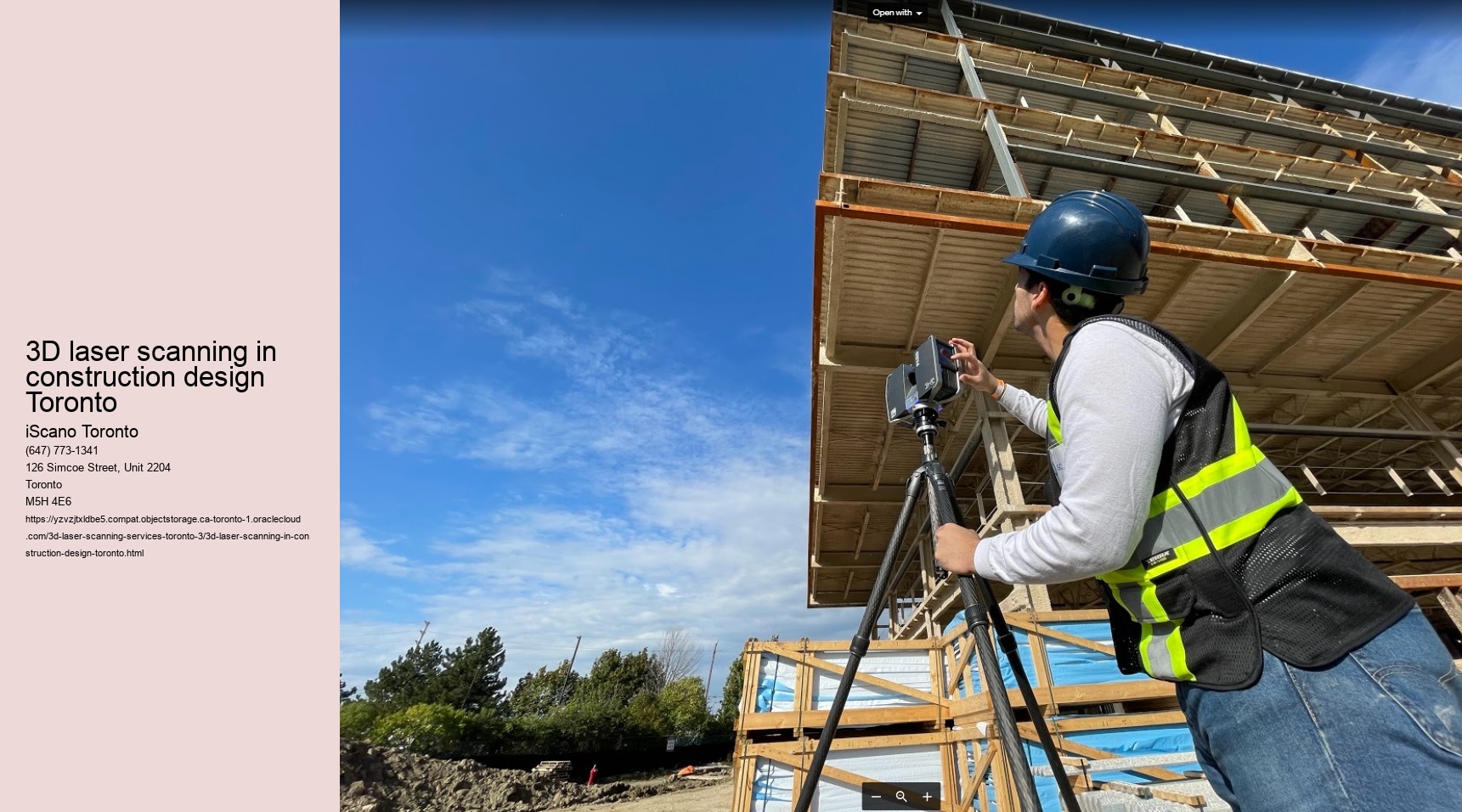
One day, a coworker recommended we attempt 3D laser scanning. Doubtful yet fascinated, I agreed. We brought in a team of professionals that established their devices around the center. Within hours, they had captured countless information points, developing an exact electronic reproduction of the structure. As I saw the point cloud form on the display, I realized we got on the cusp of a new age in layout and design.
The Knowing Curve
Transitioning to this brand-new innovation was not without its obstacles. The initial discovering curve was steep. Comprehending exactly how to interpret the information, incorporate it right into our design software program, and use it effectively required effort and time. Nonetheless, the advantages rapidly became apparent.
Among the initial jobs where we completely utilized 3D laser scanning was the style of a new factory. The site was an irregular terrain with several existing structures. Traditionally, this would have required extensive surveying, many site visits, and plenty of hours of hands-on data processing. With 3D laser scanning, we had the ability to capture the entire site in an issue of days, offering us with a highly accurate, comprehensive model to deal with.
Accuracy and Performance
The accuracy offered by 3D laser scanning is unparalleled. It captures every minute information, from the slight tilt of a wall surface to the tiniest fracture in the structure. This level of precision is crucial in design and design, where even small errors can bring about substantial problems down the line.
As an example, in one of our projects entailing the setup of huge industrial tools, specific measurements were essential. The equipment required to fit completely within an existing structure, with minimal clearance on all sides. Utilizing 3D laser scanning, we were able to develop a thorough model of the setup site and the tools, guaranteeing an excellent fit. This not just saved time and sources but also removed the threat of costly alterations in the future.
Enhancing Collaboration
One of one of the most significant benefits of 3D laser scanning is its capability to boost partnership. In the past, interacting intricate style concepts and changes to stakeholders, including customers, service providers, and various other team members, was frequently a cumbersome procedure. Misunderstandings and false impressions prevailed, causing delays and remodel.
With 3D laser scanning, we can develop extremely detailed, interactive designs that everybody can recognize. These versions can be easily shared and assessed, allowing for real-time partnership. This has structured our process, improved interaction, and made certain that everyone is on the very same page throughout the job lifecycle.
Applications in Style and Design
The applications of 3D laser scanning in layout and design are substantial and differed. Right here are a few noteworthy instances from my experience:
-
Historical Preservation: One of the most rewarding tasks I’ve been involved in was the preservation of a historical structure. The structure, with its detailed architectural information and elaborate designs, needed a precise approach. Making use of 3D laser scanning, we had the ability to catch every detail, developing an electronic archive that will offer future generations. The data was likewise utilized to direct the reconstruction process, making sure that every element was maintained with miraculous accuracy.
-
Framework Jobs: In big facilities tasks, such as the construction of bridges and highways, accuracy is critical. Standard surveying approaches frequently fall short, bring about inconsistencies and potential security hazards. 3D laser scanning gives a thorough, precise representation of the website, enabling specific planning and implementation. In one of our bridge building and construction projects, the modern technology assisted us identify and resolve potential concerns early, making sure a smooth and successful conclusion.
-
Manufacturing and Assembly: In the manufacturing market, 3D laser scanning has come to be a very useful tool. It enables us to develop thorough models of components and assemblies, making certain that every little thing meshes flawlessly. This has significantly lower errors and remodel, bring about boosted performance and price savings. In one of our jobs, we utilized 3D laser scanning to reverse designer a complex maker component, permitting us to create an exact replica with better efficiency characteristics.
-
Facility Management: Taking care of huge centers, such as factories and storage facilities, can be difficult. 3D laser scanning gives a thorough, up-to-date model of the facility, allowing for efficient space usage, maintenance preparation, and safety and security administration. In one of our facility management jobs, the innovation assisted us maximize the format, enhancing workflow and lowering functional expenses.
The Future of 3D Laser Scanning
As technology continues to advance, so also does the possibility of 3D laser scanning. The assimilation of artificial intelligence and machine learning is opening up new possibilities, from automated data processing to anticipating upkeep. The advent of mobile and portable scanners is making the technology more easily accessible and flexible, enabling real-time scanning in various settings.
Among the most exciting advancements is the combination of 3D laser scanning with Building Information Modeling (BIM). This mix is reinventing the building market, supplying a detailed, real-time sight of the job lifecycle. It allows for far better planning, coordination, and execution, minimizing errors and boosting effectiveness.
Personal Representations
Reflecting on my trip with 3D laser scanning, I am amazed at exactly how far we’ve come. What began as an interest has actually become an essential part of our process, changing the means we approach design and engineering. The technology has not just enhanced our effectiveness and accuracy but additionally opened up new possibilities and possibilities.
Nonetheless, truth impact of 3D laser scanning goes beyond the technological aspects. It has actually basically transformed the method we assume and function. It has actually fostered a culture of technology and partnership, urging us to press the limits and discover brand-new frontiers. It has actually additionally reminded us of the value of accuracy and focus to information, high qualities that are frequently ignored in today’s fast-paced world.
Final thought
In conclusion, 3D laser scanning services have played an essential duty in bridging the gap in between principle and truth in style and design. The innovation has transformed the way we come close to projects, from preliminary surveys to final execution. It has actually enhanced our precision, performance, and partnership, permitting us to deal with intricate challenges with self-confidence and imagination.
As I look to the future, I am delighted regarding the possibilities that lie ahead. With continued developments in innovation, the possibility of 3D laser scanning is unlimited. I am confident that it will certainly continue to shape and change the design and design landscape, turning our wildest ideas right into truth.
In the end, it is not almost the technology itself, however about what it enables us to achieve. It is about the ability to transform desires into truth, to develop something phenomenal out of nothing. Which, to me, is real essence of style and design.
| Industry | Benefits of 3D Laser Scanning Technology |
|---|---|
| Construction | 3D laser scanning provides accurate measurements and detailed site documentation, aiding in design, planning, and construction management, reducing errors and rework. |
| Architecture | Architects use 3D laser scans to create precise as-built models of existing structures, facilitating renovation, preservation, and new design integration. |
| Manufacturing | This technology enhances quality control, reverse engineering, and the creation of detailed 3D models for custom parts and prototypes. |
| Oil and Gas | 3D scanning helps in creating detailed models of complex facilities, improving maintenance planning, safety inspections, and retrofitting projects. |
| Automotive | It is used for quality inspection, reverse engineering, and creating digital twins of parts for design and production optimization. |
| Aerospace | Ensures precision in part manufacturing, aids in reverse engineering of aircraft components, and assists in maintaining accurate records of modifications and repairs. |
| Healthcare | Provides accurate models for custom prosthetics, dental implants, and surgical planning, enhancing patient outcomes and reducing procedural risks. |
| Cultural Heritage | Used for the preservation and restoration of historical sites and artifacts by creating detailed digital records and facilitating accurate restorations. |
| Mining | Enhances safety and efficiency in mine planning and operations by providing detailed 3D maps of underground environments and surface topographies. |
| Civil Engineering | Assists in infrastructure projects by offering precise surveys and models of existing conditions, improving design, analysis, and construction phases. |