As I keep an eye out over the stretching cityscape of Toronto, with its imposing high-rise buildings, historic buildings, and quickly creating city areas, I’m reminded of the countless 3D laser scanning projects I’ve been involved in throughout this lively city. The diversity of Toronto's style and facilities presents distinct challenges, yet every project has actually been a chance for development and development.
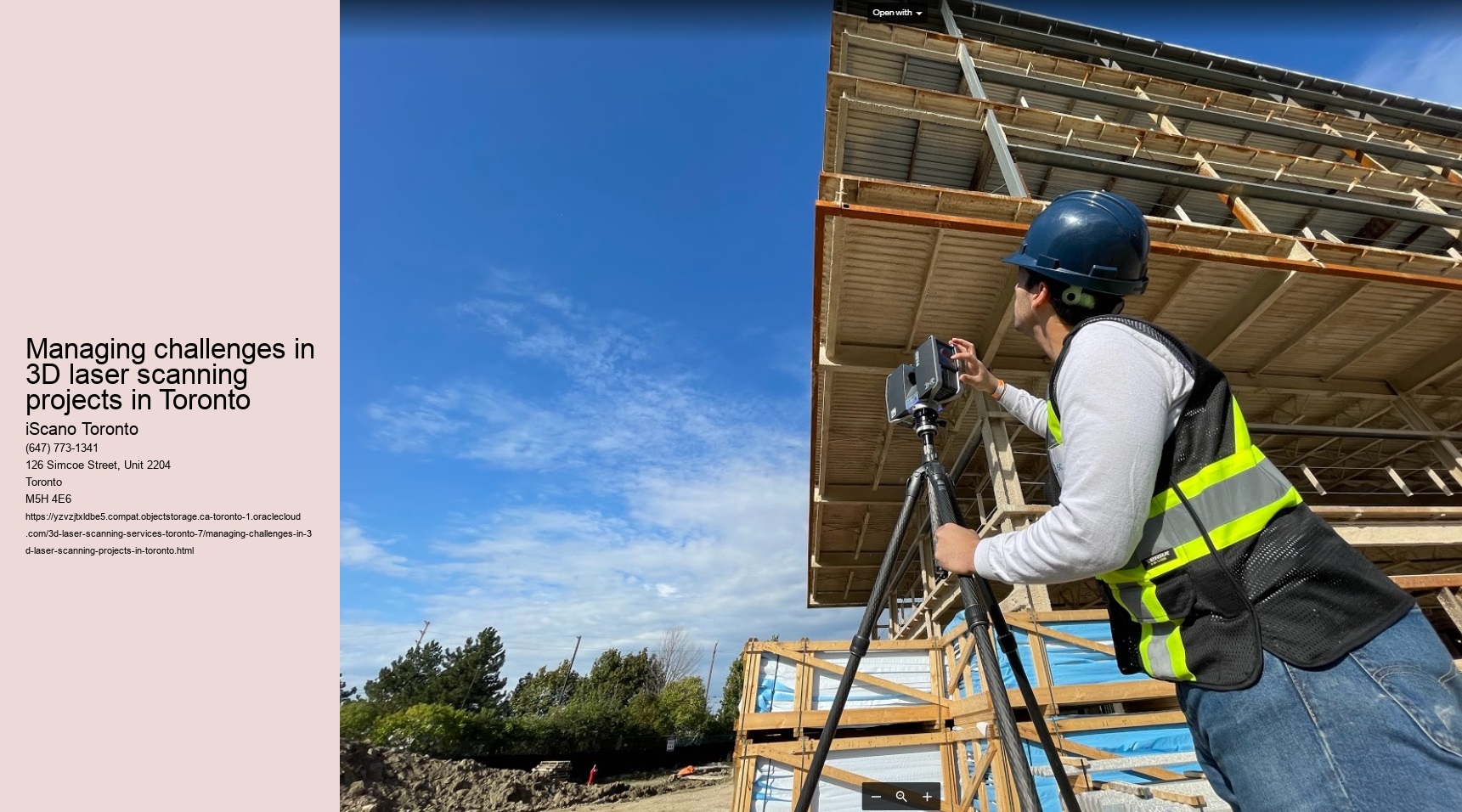
3D laser scanning is a powerful tool that permits us to catch accurate, high-definition pictures of frameworks, landscapes, and facilities. It’s an innovation that has transformed industries like building and construction, architecture, and design, making it feasible to produce comprehensive 3D versions that are precise to the millimetre. However, the procedure isn’t without its obstacles. For many years, I've dealt with countless barriers that have examined my skills, patience, and creative thinking. Here’s just how I've discovered to get rid of
Toronto is a city that never ever quits relocating. From the bustling downtown core to the quiet domestic roads, there’s always something taking place. This consistent task can present significant challenges when it comes to 3D laser scanning. Catching exact data in a hectic urban setting requires mindful preparation and sychronisation.
I keep in mind one job where we needed to scan a historical building situated in the heart of downtown Toronto. The building was surrounded by hectic streets, with lorries, pedestrians, and bicyclists frequently going by. Establishing the scanning equipment without interrupting web traffic or endangering any individual was a logistical nightmare.
To conquer this challenge, we worked closely with city authorities to secure authorizations and coordinate roadway closures throughout off-peak hours. We also used mobile scanning tools that can be quickly established and removed, lessening our effect on the bordering location. It wasn’t simple, however completion result was worth the initiative. We were able to catch comprehensive scans of the structure’s complex exterior, maintaining its history for future generations.
Toronto’s weather is infamously unforeseeable. One moment it’s bright, and’the following, you're caught in a downpour. When you're working with a 3D laser scanning project, weather conditions can make or break your success. Rain, snow, and haze can all disrupt the precision of the scans, bring about altered data and incomplete designs.
I’ve found out by hand that you can’t constantly rely upon the weather prediction. On one occasion, we were tasked with scanning a huge industrial center on the outskirts of Toronto. The forecast called for clear skies, but as we began establishing our devices, dark clouds began rolling in. Within minutes, we were struck with a torrential rainstorm.
We promptly covered our equipment and looked for shelter, but the rain didn’t let up. As opposed to calling it a day, we adapted our method. We focused on scanning the interior locations of the center while awaiting the climate to enhance. When the rainfall finally diminished, we resumed our outside scanning. It took longer than expected, yet by being adaptable and adjusting our strategies, we were able to complete the project without compromising on top quality.
One of one of the most considerable advantages of 3D laser scanning is the large quantity of data it can catch. Nonetheless, this can likewise be one of its biggest difficulties. The large datasets created by 3D scanners can be frustrating, especially when you’re working with large-scale tasks. Managing, handling, and analyzing this data needs powerful software application and a high level of knowledge.
I remember a project where we were charged with scanning a facility industrial site with various structures, pipelines, and devices. The scans created terabytes of information, and sorting through it all was an overwhelming task. Our group invested hours refining the information, and it swiftly ended up being clear that our current software application wasn’t as much as the obstacle
. To overcome this, we purchased advanced software application and updated our computer system systems. We also created a structured process for processing the information in convenient chunks. By breaking the task down into smaller sections, we were able to concentrate on one area at once, ensuring that nothing was ignored. It was a beneficial lesson in the importance of having the right tools for the job.
Toronto’s building landscape is exceptionally varied, with whatever from sleek modern skyscrapers to historical structures with detailed outlining. Catching the complicated geometries of these frameworks can be a considerable challenge. Also the smallest inaccuracy can lead to errors in the last model, which can have serious implications for building and improvement tasks.
I remember servicing a project that included scanning an elaborate historical building in Toronto’s financial district. The structure had elaborate makings and decorative elements that were challenging to record with typical scanning methods. We needed a service that would certainly enable us to catch every information with accuracy.
After researching different options, we made a decision to make use of a combination of 3D laser scanning and photogrammetry. By taking high-resolution photographs and combining them with the laser scans, we were able to create a detailed and exact version of the structure. It was a complex process, yet the results were sensational. The model caught every nuance of the building’s style, supplying useful insights for the renovation team.
One of one of the most difficult facets of any 3D laser scanning job is handling client assumptions. Clients often have high expectations for what the modern technology can achieve, and it’s approximately us to balance those expectations with the truths of the job.
I’ve worked with clients who wanted every little thing checked down to the tiniest detail, even when it wasn’t essential for the job's objectives. In these cases, it's important to have open and sincere communication. I’ve discovered to make the effort to describe the restrictions of the innovation and why certain concessions may be necessary.
In one task, a customer desired us to scan an entire office complex, consisting of every space, hallway, and closet. While it was technically feasible, it would certainly have been a substantial task that would certainly have included substantial time and price to the task. After reviewing the customer’s needs in more detail, we had the ability to tighten the scope of the scan to focus on the locations that were crucial for their restoration plans. The customer was satisfied with the final result, and we were able to complete the task on time and within spending plan.
The area of 3D laser scanning is constantly progressing, with new technologies and strategies being created at all times. Staying in advance of the curve is crucial if you intend to continue to be competitive in the market. This indicates constantly discovering, experimenting with brand-new devices, and adjusting to changes in the field.
I make it an indicate participate in sector conferences and workshops, where I can find out about the most recent advancements in 3D scanning technology. I also team up with other professionals in the area, sharing knowledge and insights that help all of us improve our skills.
In one instance, I had the possibility to test out a brand-new sort of scanner that promised quicker information capture and boosted precision. The project included scanning a big sports facility in Toronto, and the new modern technology allowed us to complete the scan in record time. The experience instructed me the value of being open to new ideas and accepting innovation.
3D laser scanning projects in Toronto are challenging but extremely gratifying. The city’s vibrant environment, diverse architecture, and unforeseeable weather condition all contribute to the intricacy of the work. Nevertheless, by remaining versatile, buying the right devices, and preserving clear interaction with customers, I’ve had the ability to conquer these challenges and provide effective tasks.
Each task I take on in Toronto is a brand-new journey, full of its very own one-of-a-kind collection of challenges. However it’s these difficulties that make the job so fulfilling. Whenever I see the last 3D design of a completed job, I’m advised of why I like what I do. The capacity to catch and preserve the significance of Toronto’s buildings and landscapes is an advantage, and I eagerly anticipate much more years of pushing the limits of what’s possible in 3D laser scanning.
The 2016 American League Wild Card Game played at Rogers Centre. The stadium is used by the Toronto Blue Jays.
Toronto is home to the Toronto Maple Leafs, one of the NHL's Original Six clubs, and has also served as home to the Hockey Hall of Fame since 1958.[244] The city had a rich history of hockey championships. Along with the Maple Leafs' 13 Stanley Cup titles, the Toronto Marlboros and St. Michael's College School-based Ontario Hockey League teams, combined, have won a record 12 Memorial Cup titles.[245] The Toronto Marlies of the American Hockey League also play in Toronto at Coca-Cola Coliseum and are the farm team for the Maple Leafs. The Toronto Six, the first Canadian franchise in the National Women's Hockey League, began play with the 2020–21 season.[246]
The city is home to the Toronto Blue Jays MLB baseball team. The team has won two World Series titles (1992, 1993).[247][248] The Blue Jays play their home games at the Rogers Centre in the downtown core. Toronto has a long history of minor-league professional baseball dating back to the 1800s, culminating in the Toronto Maple Leafs baseball team, whose owner first proposed an MLB team for Toronto.[249]
The Toronto Raptors basketball team entered the NBA in 1995, and have since earned eleven playoff spots and five Atlantic Division titles in 24 seasons.[250] They won their first NBA title in 2019.[251] The Raptors are the only NBA team with their own television channel, NBA TV Canada.[252] They play their home games at Scotiabank Arena, which is shared with the Maple Leafs. In 2016, Toronto hosted the 65th NBA All-Star game, the first to be held outside the United States.[253]
Scotiabank Arena from Bremner Boulevard. The NBA's Toronto Raptors and the NHL's Toronto Maple Leafs play their home games at the arena.
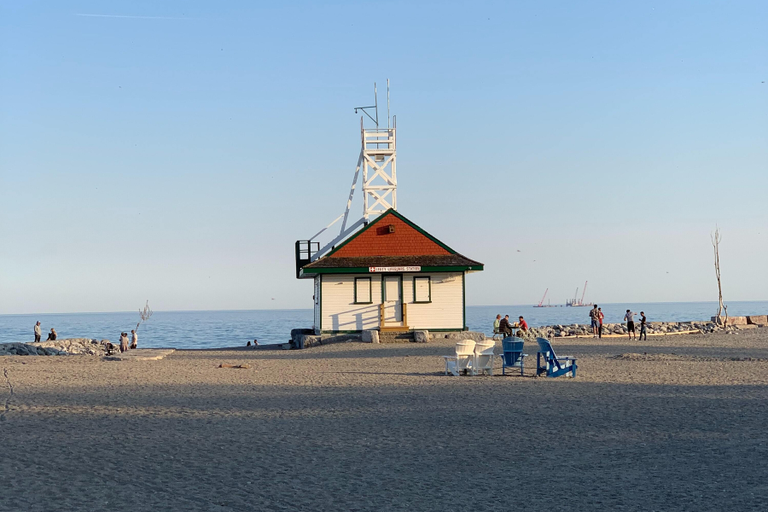
Woodbine Beach is the perfect place to spend a relaxing day. This beach is along Lake Ontario and offers a perfect blend of relaxation and revelry. The 3-km-long shore is a popular spot for sunbathing, swimming, water sports, beach volleyball, picnics and an Olympic-sized pool.
Woodbine Beach is located in an area locally known as “The Beaches” and the people who live here love it here. Restaurants and cafes all along Queen Street provide plenty of options for lunch or dinner.
TIP: The beach can get noisy and crowded as it is one of the popular outdoor attractions in Toronto. If you need a breather, you can walk across to the calm and scenic Woodbine Park. Or keep walking east and take in the lakefront scenery all the way to Kew-Balmy Beach and Kew Gardens, a lovely park with a gazebo that started as a farm in the 1850s.
While 3D laser scanning is highly versatile, factors such as line of sight, surface reflectivity, and environmental conditions may pose challenges that Iscano Toronto can address through careful planning and execution.
By providing detailed as-built documentation, detecting clashes, verifying dimensions, and facilitating communication among project stakeholders, 3D laser scanning helps improve the accuracy and precision of construction projects.
Iscano Toronto utilizes state-of-the-art laser scanners and related equipment to ensure accurate and reliable data capture for each project.